Residential vs. Commercial Demolition in Central Texas: What Is the Difference?
Residential vs. commercial demolition in Texas involves more than just a difference in building size. The two project types diverge in permitting requirements, equipment needs, safety obligations, cost structure, and the qualifications needed from the contractor. Property owners in Waco TX and across McLennan County often approach a demolition project without a clear picture of which category applies to their job, which can lead to hiring delays, budget surprises, or the wrong crew showing up with the wrong equipment.
Understanding the distinction upfront makes it easier to ask the right questions, get accurate quotes, and confirm that a contractor has genuine experience with the specific type of work the project requires. This guide covers both project types in full and provides a clear framework for identifying which one applies.
What Is Residential Demolition?
Residential demolition refers to the removal of structures that are classified as residential properties or that sit on residentially zoned land. The scope ranges from tearing down an entire single-family home to removing a small detached outbuilding. Most residential demolition projects are driven by homeowners, estate executors, or investors managing smaller-scale property changes.
Residential projects tend to be more contained in size and scope, with shorter timelines, smaller crews, and equipment scaled to the project footprint. That said, they still require proper permitting, utility disconnections, and in many cases, hazardous material inspection before work can begin.
Types of Residential Demolition Projects
Residential demolition covers a wide range of structure types and situations:
• Full House Teardowns: Complete removal of a single-family home, including the foundation, when a rebuild or lot clearing is planned. Common in Whitney TX and Hill County for older structures that are beyond practical repair.
• Detached Garage Demolition: Freestanding garages, carports, and workshop buildings removed to reclaim yard space or prepare for a replacement structure.
• Shed and Outbuilding Removal: Storage sheds, chicken coops, old barns, and small agricultural outbuildings on residential or rural properties.
• Driveway and Concrete Slab Demolition: Breaking and removing existing concrete driveways, patio slabs, and walkways in preparation for replacement or landscaping.
• Pool Demolition: In-ground pool removal, either full excavation and backfill or partial demolition depending on future land use plans.
• Interior Gut-Outs: Full interior demolition of walls, ceilings, and flooring inside a standing structure, typically ahead of a major renovation.
Who Typically Needs Residential Demolition?
The most common clients for residential demolition work are homeowners planning to rebuild on an existing lot, investors acquiring older properties in Central Texas that are not viable for renovation, and property owners dealing with the aftermath of storm damage, fire, or flood that has rendered a structure unsafe or uninhabitable.
Estate executors managing the sale or clearing of inherited properties in McLennan County and Hill County also represent a significant portion of residential demolition requests. In many cases, clearing an outdated structure increases the land value and simplifies the sale. Rural landowners with multiple aging outbuildings frequently combine demolition with land clearing as a single site preparation project.
What Is Commercial Demolition?
Commercial demolition covers the removal of structures used for business, industrial, institutional, or mixed-use purposes. This category includes everything from a single retail storefront to a multi-building industrial campus. Commercial projects typically involve larger footprints, heavier construction materials, more complex permitting, and stricter regulatory oversight compared to residential work.
In Waco TX and across McLennan County, commercial demolition comes up regularly in the context of downtown redevelopment, industrial property repurposing, and the clearance of older commercial buildings that have reached the end of their useful life. The scope and complexity of these projects varies considerably depending on the structure type and its prior use.
Types of Commercial Demolition Projects
Commercial demolition covers a broad spectrum of structure types:
• Warehouse and Industrial Building Teardowns: Removal of large metal, masonry, or concrete structures used for manufacturing, storage, or distribution. These projects often involve significant steel and concrete recycling.
• Retail Building Demolition: Strip mall units, standalone retail stores, gas station canopies and forecourts, and commercial strip buildings along major corridors in Waco TX and surrounding communities.
• Office Building Removal: Low-rise and mid-rise office structures, medical offices, and professional buildings. Often involves careful asbestos and lead paint inspection in buildings constructed before the 1990s.
• Restaurant and Commercial Kitchen Demolition: Former food service buildings require attention to grease traps, underground drain systems, and commercial kitchen infrastructure during removal.
• Agricultural and Farm Facility Demolition: Grain storage bins, feed lots, poultry facilities, and large agricultural structures on rural commercial properties in Central Texas.
• Site Clearing for Commercial Development: Full clearing and demolition of all existing structures on a site to prepare for new commercial construction, including utilities and below-grade infrastructure.
Who Typically Needs Commercial Demolition?
Business owners selling or repurposing commercial property, real estate developers planning new commercial construction, and property management companies clearing sites for redevelopment represent the primary client types for commercial demolition work. Municipalities and county governments in McLennan County occasionally commission demolition of condemned or blighted commercial structures as part of code enforcement or community improvement programs.
General contractors managing large construction projects frequently subcontract the demolition phase to a specialist crew with the right equipment and compliance infrastructure. For projects in Waco TX involving historic districts or properties near regulated waterways, additional review and coordination with local authorities is typically required before demolition can proceed.
Key Differences Between Residential and Commercial Demolition
The differences between these two project types run deeper than building size. Here is a breakdown of the major areas where residential vs. commercial demolition diverge in Central Texas:
| Factor | Residential | Commercial |
|---|---|---|
| Structure Types | Homes, garages, sheds, driveways | Offices, warehouses, retail, industrial |
| Typical Project Size | Small to medium | Medium to large |
| Permit Complexity | Moderate | Higher, multi-agency review |
| Equipment Scale | Compact to mid-size machinery | Heavy-duty, specialized equipment |
| Hazmat Likelihood | Moderate (pre-1980 homes) | Higher (industrial materials, PCBs) |
| Timeline | 1 day to 1 week | 1 week to several months |
| Relative Cost | Lower overall scope | Higher due to scale and compliance |
Project Scale and Equipment
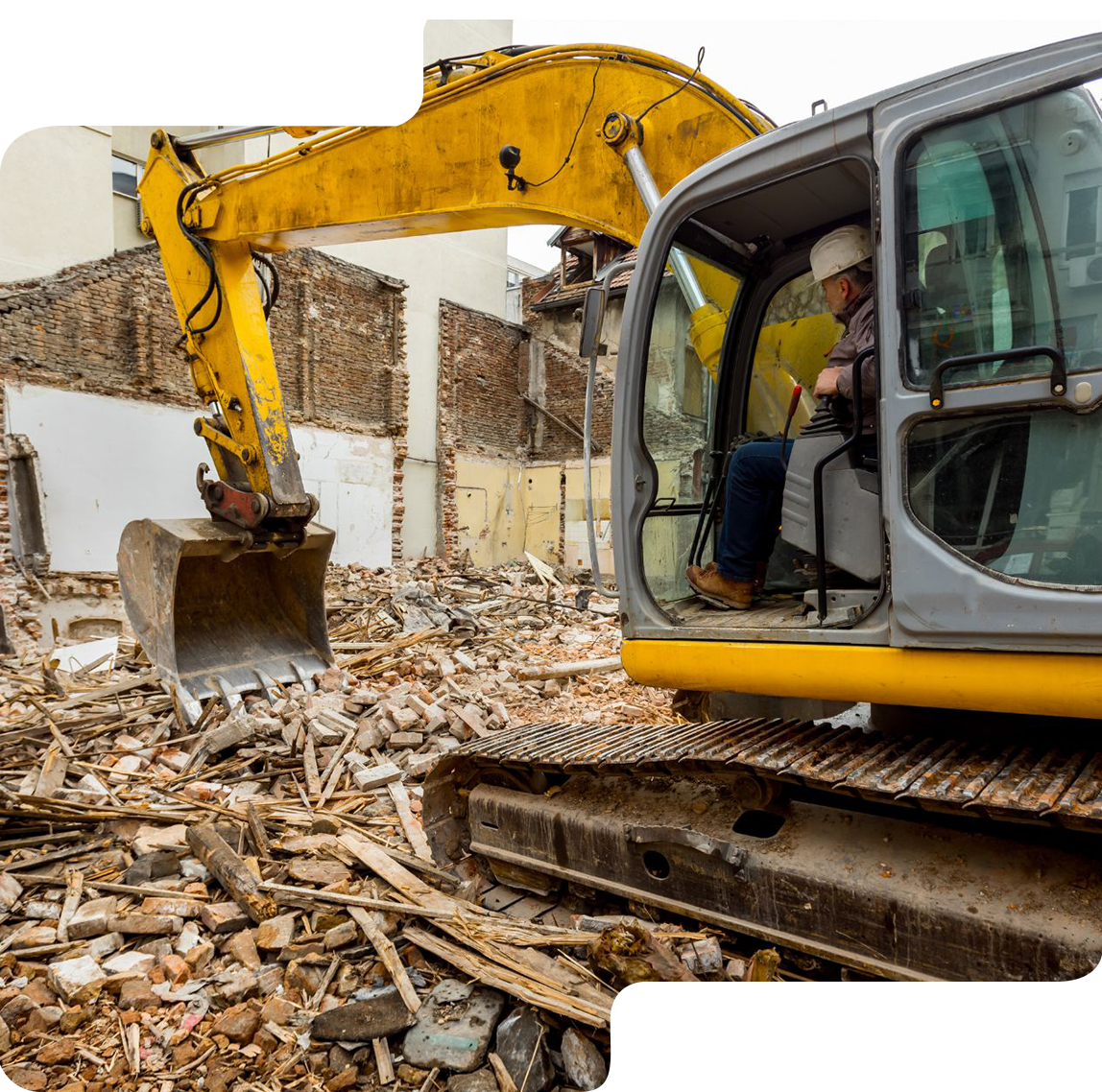
Residential demolition projects typically use compact to mid-size equipment: mini excavators, skid steer loaders, demolition hammers, and smaller haul trucks. A single-family home teardown in Whitney TX might require one excavator operator and a two-person ground crew working over two to four days, with two or three truckloads of debris haul-out.
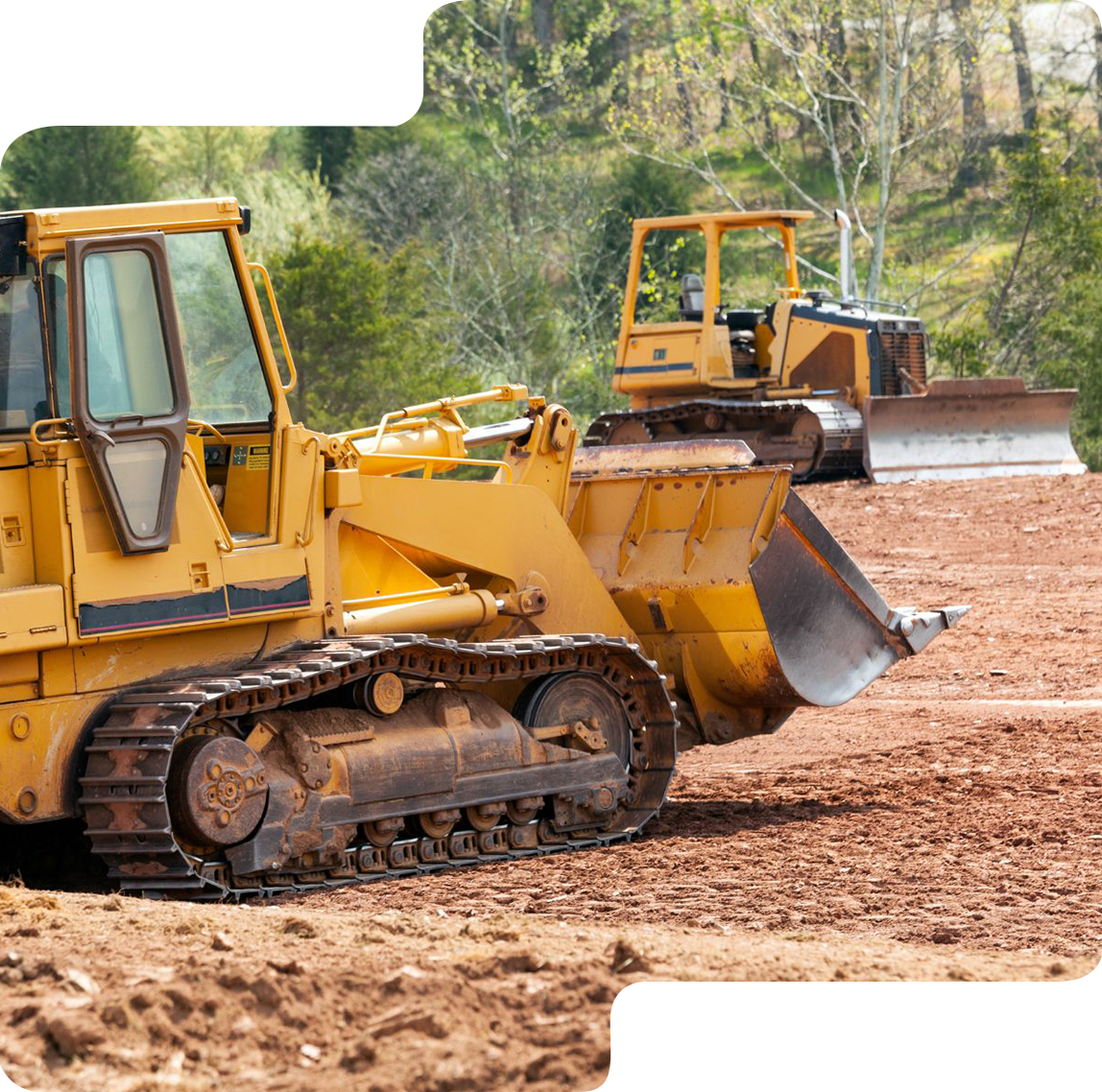
Commercial demolition operates at a different scale. Warehouse teardowns and industrial site clearing require high-reach excavators, large hydraulic breakers, multiple haul trucks running simultaneously, and crews sized to match the demolition rate. The machinery itself weighs significantly more and requires better site access, reinforced staging areas, and more detailed mobilization planning. For very large commercial projects, specialized equipment like wrecking cranes or implosion coordination may be necessary.
Permitting Requirements in Texas
The permitting process for commercial demolition in Texas is more layered than for residential work. Commercial projects often require review from multiple agencies depending on the structure type, location, and prior use of the building. The Texas Department of Licensing and Regulation oversees contractor licensing for both project types, but commercial projects may also require sign-off from local fire marshals, environmental agencies, and, in some jurisdictions, a historic preservation review.
In McLennan County and the City of Waco, commercial demolition permits typically take longer to process than residential permits due to the additional review steps. Projects near regulated waterways, in designated floodplains, or adjacent to historically significant districts require additional documentation and, in some cases, public notice periods before work can begin. Property owners planning commercial demolition in Waco TX should budget several weeks to months for the full permit cycle depending on project complexity.
Residential demolition permits, while still required in most cases, generally follow a faster track. A straightforward home teardown in an unincorporated area of Hill County or McLennan County can often be permitted within one to two weeks of application submission.
Cost Factors and Timelines
Commercial demolition consistently costs more than residential demolition, and for several compounding reasons. Larger structures require more equipment hours, larger crews, and higher fuel and transportation costs. Commercial buildings frequently contain more complex hazardous material profiles than residential structures, including PCBs in older electrical components, mercury-containing fluorescent lighting systems, and asbestos in mechanical insulation that extends throughout the building.
Debris volumes are substantially larger in commercial projects, and disposal costs scale accordingly. Steel, concrete, and specialty materials like fireproofing compounds require different handling than standard residential debris. For complex commercial sites, the pre-demolition environmental assessment alone, including asbestos surveys, Phase I or Phase II environmental site assessments, and regulatory notifications, can add weeks to the project schedule and meaningful costs before a single piece of equipment touches the building.
Residential projects move faster and cost less in nearly all comparable cases. A detached garage removal in Waco TX might be completed in a single day. A full home teardown typically takes two to five days from mobilization to site cleanup. Commercial projects run from one week for small retail buildings to several months for large industrial complexes.
Safety and Environmental Compliance
Commercial demolition projects carry more extensive safety and environmental compliance obligations than residential work. The OSHA demolition safety standards that apply to both project types are more rigorously enforced and more complex to implement on commercial job sites due to larger crew sizes, more hazardous materials, and greater public exposure risk.
The U.S. Environmental Protection Agency sets specific requirements for the demolition of commercial and industrial buildings, including the National Emission Standards for Hazardous Air Pollutants (NESHAP) regulations that govern asbestos removal from commercial structures. These requirements mandate written notification to the EPA or state agency before demolition begins on any commercial building, regardless of whether asbestos is known to be present. For residential projects, NESHAP applies primarily to larger multi-family structures rather than single-family homes.
Stormwater management is another compliance area where commercial projects require more extensive planning. Any demolition site that disturbs more than one acre of land typically requires a Texas Pollutant Discharge Elimination System (TPDES) permit from TCEQ, along with a Stormwater Pollution Prevention Plan (SW3P). Residential projects rarely trigger this threshold, but large-scale commercial site clearing often does.
Which Type of Demolition Does Your Project Need?
The following questions help narrow down project type before reaching out to a contractor:
• What is the zoning classification of the property? Residential zoning generally points to residential demolition; commercial or industrial zoning points to commercial demolition. Mixed-use properties may require clarification.
• What is the primary use of the structure being demolished? A home is residential regardless of lot size. A building used for business operations, storage of commercial goods, or industrial production is commercial.
• What is the total square footage of the structure? While not the only factor, structures above 5,000 square feet are increasingly likely to fall into commercial category for permitting and compliance purposes.
• When was the building constructed? Pre-1980 structures of either type require hazmat assessment. Commercial buildings constructed before 1990 have elevated asbestos and PCB risk that affects project planning significantly.
• What is the planned use of the site after demolition? New residential construction, commercial development, or agricultural use each have different site prep requirements that should be incorporated into the demolition scope.
• Is the structure connected to municipal utilities or on a private well and septic system? Commercial structures typically connect to municipal systems, which require coordination with city utility departments for capping and disconnection.
If the answer to any of these questions is unclear, the simplest step is to describe the project to a licensed local contractor during a site assessment. An experienced crew can identify the project type, outline the permit requirements, and recommend the appropriate scope of work.
Property owners managing projects in Waco TX, McLennan County, and the surrounding region can review the full scope of available demolition services to understand how different project types are handled from start to finish.
The residential vs. commercial distinction also matters when it comes to site conditions after demolition is complete. Residential projects typically wrap up with rough grading, debris removal, and the lot returned to a clean, level state ready for the next phase. Commercial site closures are often more involved: filled below-grade voids from basement or vault removal must be compacted to specific engineering standards, utility caps must be documented and submitted to the relevant providers, and environmental clearances may need to be obtained before the site can be transferred to a new owner or developer.
Underground structures are another consideration that comes up more often in commercial demolition than residential. Older commercial properties in Waco TX and across McLennan County may have underground fuel storage tanks, vault systems, loading dock pits, or utility tunnels that are not visible from the surface and may not appear on standard building plans. A thorough pre-demolition site investigation, including a review of historical Sanborn fire insurance maps or prior environmental site assessments, helps identify these features before equipment hits the ground.
For residential projects, the most common below-grade surprises are old septic tanks, buried fuel oil tanks from former heating systems, and cisterns or hand-dug wells that predate municipal water connections. These features are particularly common on older rural properties in Hill County and Bosque County. Locating and properly decommissioning them before demolition prevents equipment damage, project delays, and potential liability.
Documentation is equally important on both project types, though the volume and complexity differ. For residential demolition, a permit record, utility disconnection confirmations, and a before-and-after photo set typically cover the documentation needs. Commercial projects may generate environmental notification records, asbestos abatement manifests, waste disposal certifications, and multiple permit closeout documents that all need to be organized and retained by the property owner.
How to Find the Right Demolition Contractor in Central Texas
Whether the project is residential or commercial, the criteria for selecting a qualified demolition contractor in Central Texas overlap considerably. The key variables are licensing, insurance, equipment capability, and demonstrated local experience.
• Verify State Licensing: Texas requires demolition contractors to hold appropriate licensing through TDLR. Confirm active license status before signing any agreement. For commercial projects, confirm that the contractor has specific experience with commercial or industrial demolition, not just residential work.
• Confirm Insurance Coverage: Liability insurance and workers compensation are non-negotiable for either project type. Commercial projects often require higher coverage limits due to greater property exposure and crew size. Request current certificates of insurance and confirm they cover the full project scope.
• Evaluate Equipment Depth: Ask what equipment the contractor owns and operates. A residential-only contractor may not have the heavy machinery required for commercial work. Confirm that the fleet matches the demands of the specific project.
• Ask About Hazmat Experience: Both residential and commercial projects can involve hazardous materials, but the regulatory requirements differ. Confirm the contractor has experience coordinating licensed asbestos abatement, environmental notifications, and the specific compliance obligations that apply to the project type.
• Look for Local Project History: A contractor with a track record in McLennan County and the surrounding area understands local permitting timelines, knows the inspectors, and has established relationships with local utility providers and disposal facilities.
• Request a Written Scope and Quote: Any reputable contractor provides a detailed written estimate before work begins. The quote should itemize labor, equipment, permit fees, hazmat coordination, debris hauling, and any exclusions. Vague lump-sum bids are a red flag for either project type.
Comparing residential and commercial demolition comes down to scale, compliance complexity, and the specific demands each project type places on the contractor and the property owner. Both project types are manageable with the right crew and a well-organized plan.
For projects in the Waco TX area and across McLennan County, reviewing what is covered under local demolition services in Waco TX provides a clear picture of what a qualified crew includes in a standard engagement.
Residential or Commercial: Both Projects Start With the Right Contractor
The distinction between residential vs. commercial demolition in Central Texas matters because it determines the equipment, permits, safety protocols, environmental compliance, and overall project timeline. Residential projects are generally faster, less expensive, and less regulated. Commercial projects are larger in scope, carry more compliance requirements, and require a contractor with the depth and equipment to manage the added complexity.
What both project types have in common is the need for a licensed, insured, and locally experienced contractor who can manage the full scope from permit to site cleanup. In Waco TX, McLennan County, and across Central Texas, property owners benefit from working with a crew that handles both residential and commercial work regularly and understands the specific requirements of each.
Call (254) 205-6983 or visit our website to request a free quote. Whether the project is a single-family home teardown or a commercial building removal, the team will assess the scope, outline the permit requirements, and provide a clear estimate with no obligation.
Recent Posts